Balance Transfer
Balance Transfer refers to the process of transferring the outstanding amount of an existing loan from one financial institution to another. The primary reason for this transfer is to obtain better conditions, including a lower rate of interest. The primary goal of balance transfer is to eliminate debt entirely. It is never too late to switch to a better bank that offers a lower rate of interest.
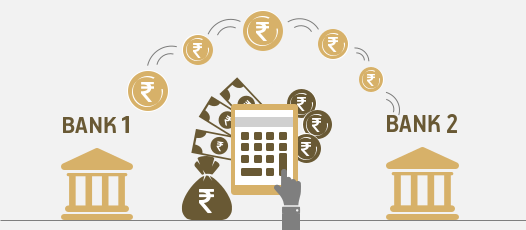
Balance Transfer Process:
-
1. Calculate the interest savings on your loan by comparing current interest rates from different banks.
-
2. Calculate the expected cost of the loan transfer, taking into account any applicable charges and fees.
-
3. Consider the net benefits before deciding whether or not to transfer your balance. Make a list of several banks to whom you might want to move your current loan.
-
4. Compare the interest rates offered by the banks you've identified, your loan amount eligibility, and their loan process.
-
5. Apply for a NOC (No Objection Certificate) and foreclosure letter from your present bank after you've decided on the new bank and decided to move forward with the transfer.
-
6. Start the application with the new bank. Submit the loan documents, as well as a complete repayment record.
-
7. Obtain a sanction letter and sign the new loan arrangement with the new banks.
-
8. Take a disbursement from the new bank in the form of a cheque or a demand draft in the name of the existing bank and deposit it with the existing bank.
-
9. The previous bank will cancel all cheques and ECS and shut your personal loan account once the outstanding loan payment is received.